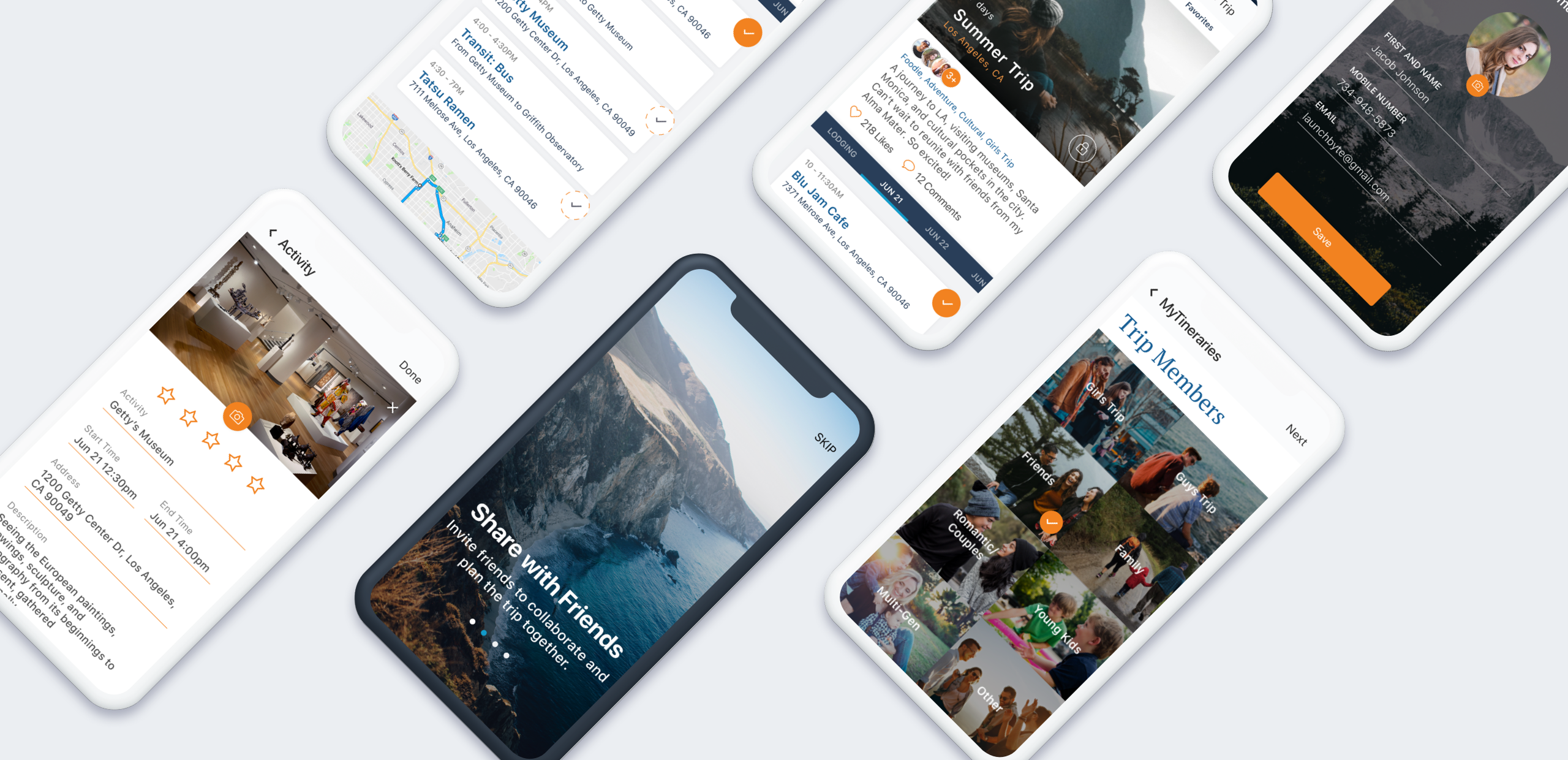
Overview
MyTineraries is being brought to life by two avid travelers. In their experiences, they've always been keen on travel planing but find it overwhelming to sift through so much information online. This brought on the idea to build a product for creating and sharing of itineraries. My role as the UX/UI designer is to find the pain points of travel planning and design an experience that is seamless and delightful. Below are my personal contributions to the project.
The Challenge
For many people, starting a traveling itinerary involves searching 'places to visit in _______'. However, of all the hundreds of thousands of recommendations online, which one is really worth going to? How can we help travelers pick out activities and attractions that best fit their traveling style?
The Solution
A mobile application that helps spark inspiration by exploring other itineraries of the same destination. Travelers can see itineraries of different trip styles, save interested attractions, and add them to their own plans. Afterwards, they can share their trips as an experience to be remembered while also inspiring others to travel.
User Research
I spearheaded the user research process to find out what the current travel planning process is and how the experience can be improved. Through user interviews, I began stepping into the shoes of travelers in their trip planning.
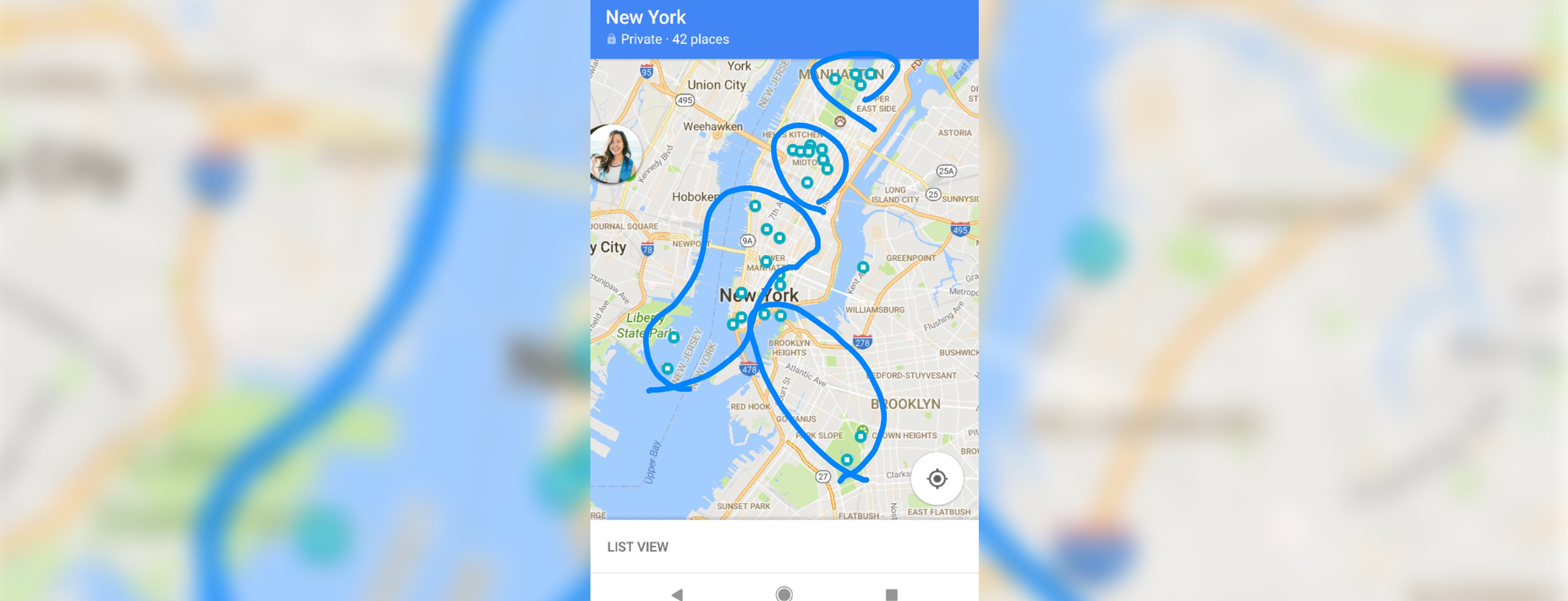
There was a common thread across the conversations I had. Every interviewee began by searching for a list of recommended places. They would also ask friends and family for recommendations. In their process, they would compile a list of generally interested attractions and then cut things out to narrow down that list. Travelers often wanted to maximize their time and visit attractions that are close together on the same day.
"I make a first list and then eliminate some to make a smaller list. Then I take the things [on the smaller list] and search them one by one, saving the addresses in Google Maps. Then I look at all the locations and cluster them. I start at the very end of the cluster and have a general idea of the order of locations."
There is a large variety in people’s traveling preferences. One traveler may prefer popular tourist attractions while another may enjoy immersing in the local culture. With different styles of travel, there is no itinerary that fits everyone’s ideal trip. Apart from trip styles, the trip members could also influence the planning, depending on whether it's a family vacation, a friends trip, or a romantic getaway.
"My friends and I don’t like touristy areas. I might go to the town next to the main attraction instead. I enjoy experiencing new culture, so I like to pick things that relate to food, religion and art … the farmer’s market, local restaurants, and temples are my favorite."
There isn’t a popular travel planning tool that congregates flight information, attractions, addresses, reviews, and all the logistics involved. Instead, travelers are using other tools not meant for the task-- Google Doc. Having no structure specific to traveling makes it difficult to find and sort through the information quickly.
"My friend who did the planning laid everything out on a Google Doc. It had the details about the flight, airbnb, locations, transportation, duration and cost."
Personas
From the research, I created 3 personas that cover different types of users:
- Kyle wants to explore as much as he can within the time he has
- Sara is going on a friends trip and wants to collaborate on planning
- Loraine usually skips out on the popular attractions but instead likes to find hidden gems

The Maximizer
Goals
- Visit popular attractions
- Plan the day efficiently, have an order of things to do within the day
- Save time, whether it be purchasing tickets online or going early to avoid crowds
Frustrations
- Sifting through a lot of information to find what is worth visiting
- Finding locations near each other to maximize the time

Group Traveler
Goals
- Enjoy a fun and stress-free trip with college friends
- Create an itinerary that members in the group can contribute to
- Make sure the plans work with everyone’s preferences
- Find attractions that meet her interest in museums, art, and food
Frustrations
- Without a shared tool, one person has to lead the planning, resulting in unequal contributions
- Planning too little buffer time, causing changes in the plan during the trip

Cultural Traveler
Goals
- Experience new culture, people, food, and religion
- Find hidden gems that are eye-opening and memorable
- Travel with some planning but also explore spontaneously at times
- Find local tips to help with trip preparation
Frustrations
- The culturally interested locations are more hidden and not always searchable on the internet
- Many traveling sites recommend popular attractions
The Challenges
1. Travelers want to select attractions that will make the trip most enjoyable. Having too many options means it is more difficult to make planning decisions.
2. Apart from interests, location is a big factor during planning. It would be most efficient to visit attractions close together on the same day.
3. There isn’t an easy way to collaborate on an itinerary and find travel information quickly.
How Might We
How might we help travelers collaborate on their itinerary and select attractions that best fit their interest?
Turning Findings into Features
The user research validated the unmet need around travel planning that MyTineraries was trying to solve for. Especially as an early-stage startup, it was important to continue testing and validating assumptions as we build the product. Once we defined the challenges or pain points, we were ready to build features that improve the planning and traveling experience.
1. Collaborate. The ability for trip members to see and pitch in to the itinerary was essential. I worked on a flow for travelers to create a trip itinerary, adding details about where, when, and how long the trip will be. Then, travelers are able to invite friends to share and collaborate on the trip plans. This would allow everyone to contribute on the planning and also have the itinerary on their phone during the trip. Everyone will be on the same page.
2. Define and search by trip styles. When creating a trip, the traveler can select what type of trip they are planning (i.e. adventurous, restful, cultural) and who will be coming along (i.e. family, friends, partner). As an inspiration, travelers can explore others' published itineraries and find ones with similar trip styles. This will help surface attractions that better fit the traveler's preferences. A foodie's trip would be filled with delicious food and restaurants while a cultural trip may include hidden gems that are tough to find.
3. Get inspired. Travelers can save/favorite attractions and restaurants they see from other itineraries. Whether they find a very compelling restaurant review or a nicely planned out day-trip, they can save and use it when creating their own itinerary. This will show where people actually visit rather than generic recommendations from the typical 'top 12 places to see' article.
4. Organize by location. The Favorites list shows a map with pinned attractions. The integrated map should give a sense of how spread out the attractions are and help travelers decide whether to travel by foot, bike, or car.
5. Review and share. At the end of the trip, the itinerary turns into a collection of experiences. Travelers can write reviews for the attractions they visited and upload photos, creating a trip album along the way.
*As an ongoing project, I am unable to show the user flow chart, wireframes, and the prototype. Once the product goes live I'll be sure to make an update, so stay tuned!
Reflection
This has been an exciting project to be apart of! I love to travel myself so I can see this product really helping people cut down their research time. However, it's definitely a tough space with a lot of competitors so I look forward to seeing how it will perform when it gets into people's hands.
In this project, I got some exposure to the financial model, which I think is always interesting to learn about. As a business, the goal is for the product to be adopted but there is also a need for a successful revenue strategy. The co-founders had to start establishing relationships with booking businesses to search for potential partnerships. It's always a good reminder that while UX is an important element in a product, it's part of a larger picture. Any business needs a forwarding-thinking strategy to keep the lights on and employees paid. The booking feature will not be in the first launch, but it's definitely a strong consideration in the future. As a designer, I think it's important to understand and address both the needs of the business as well as the users. I feel more well-rounded after having been a part of the product strategy as well as design!